PRP Maintenance: What Happens If You Stop After the Initial Series
Clinical content from Jeffrey Vogel, MD, MPH – Chief Medical Officer, Boundless
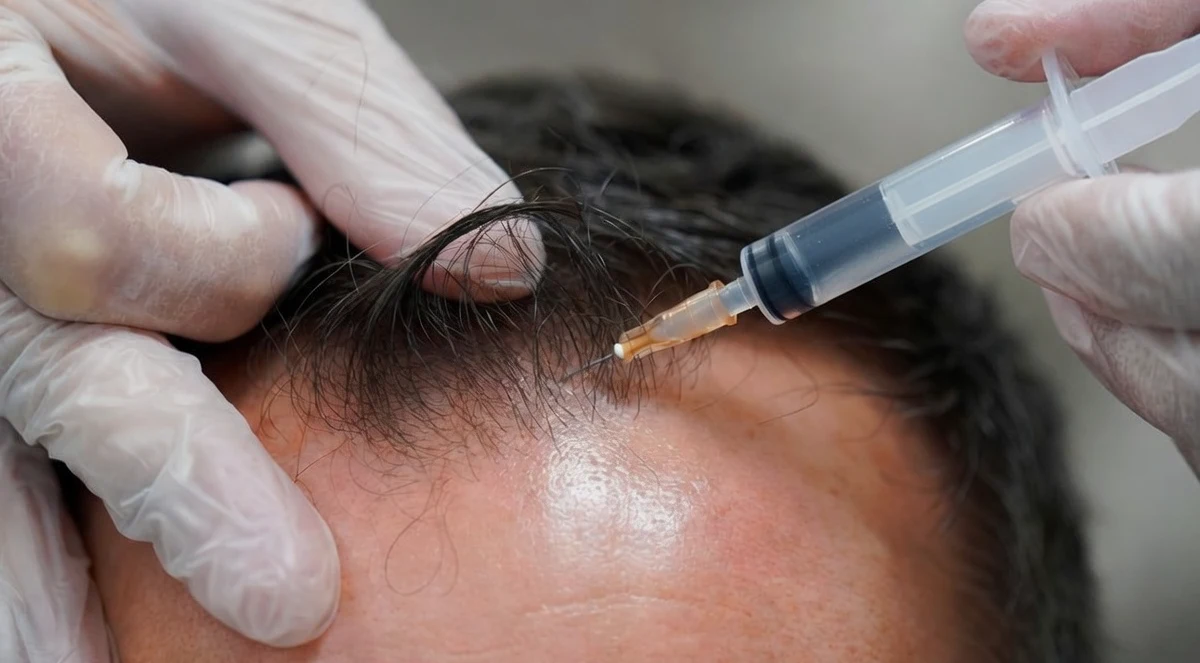
Completing the initial PRP series is a real milestone. Most men who finish three sessions see meaningful improvement – less shedding, increased density, and stronger-feeling hair. Then comes the question almost everyone asks at some point: do I actually need to keep going?
The short answer is yes. Here's why.
Why PRP results are not permanent
PRP improves the follicle environment and stimulates repair activity. It is not a fix for the underlying cause of male pattern hair loss. Androgenetic alopecia is driven primarily by DHT sensitivity – a hormonal process that continues working regardless of how many sessions you have completed.
As our Chief Medical Officer Dr. Vogel frames it: PRP applies a regenerative signal. DHT applies the opposing signal continuously. When PRP stops, one side of that equation disappears. Most men who stop all treatment see their gains begin to reverse within six to twelve months.
Research supports this directly – treatment must be continued indefinitely, as the underlying DHT-mediated miniaturization process resumes when stopped (Adil & Godwin, JAAD, 2017). [See this post for the at-home support that keeps gains from sliding between sessions.]
What maintenance actually looks like
The initial three-session series builds the cumulative effect. Maintenance is different – most men need one session every four to six months once the initial response is established. That is two to three visits per year, a manageable commitment.
At Boundless, your specialist will assess your response after the initial series and calibrate a maintenance schedule to your pattern and progression rate.
The at-home layer matters just as much
Prescription support – finasteride or dutasteride for DHT reduction, minoxidil for follicle performance – works on a completely different mechanism than in-person sessions. These are not alternatives to each other. Men who pair maintenance sessions with consistent at-home support hold their gains significantly longer than men relying on either layer alone. [See this post for the finasteride vs dutasteride breakdown. See this post for minoxidil's specific role.]
What if you have been off protocol for a while?
It depends on how far your pattern progressed, how strong your results were, and whether you maintained any prescription support in the interim. The most important thing is not to assume the window has closed. For most men, it has not – though you may be restarting rather than maintaining.
Final Thoughts
The men who get the most out of PRP treat it as part of an ongoing strategy rather than a course with a defined end point. Two to three sessions per year, paired with consistent at-home support, is what it takes to protect the results built during the initial series. [See post #24 for why men quit too early – and what that costs them.]
To learn more about PRP click HERE. To learn more about the full range of hair restoration options at Boundless, explore our Hair page HERE.